
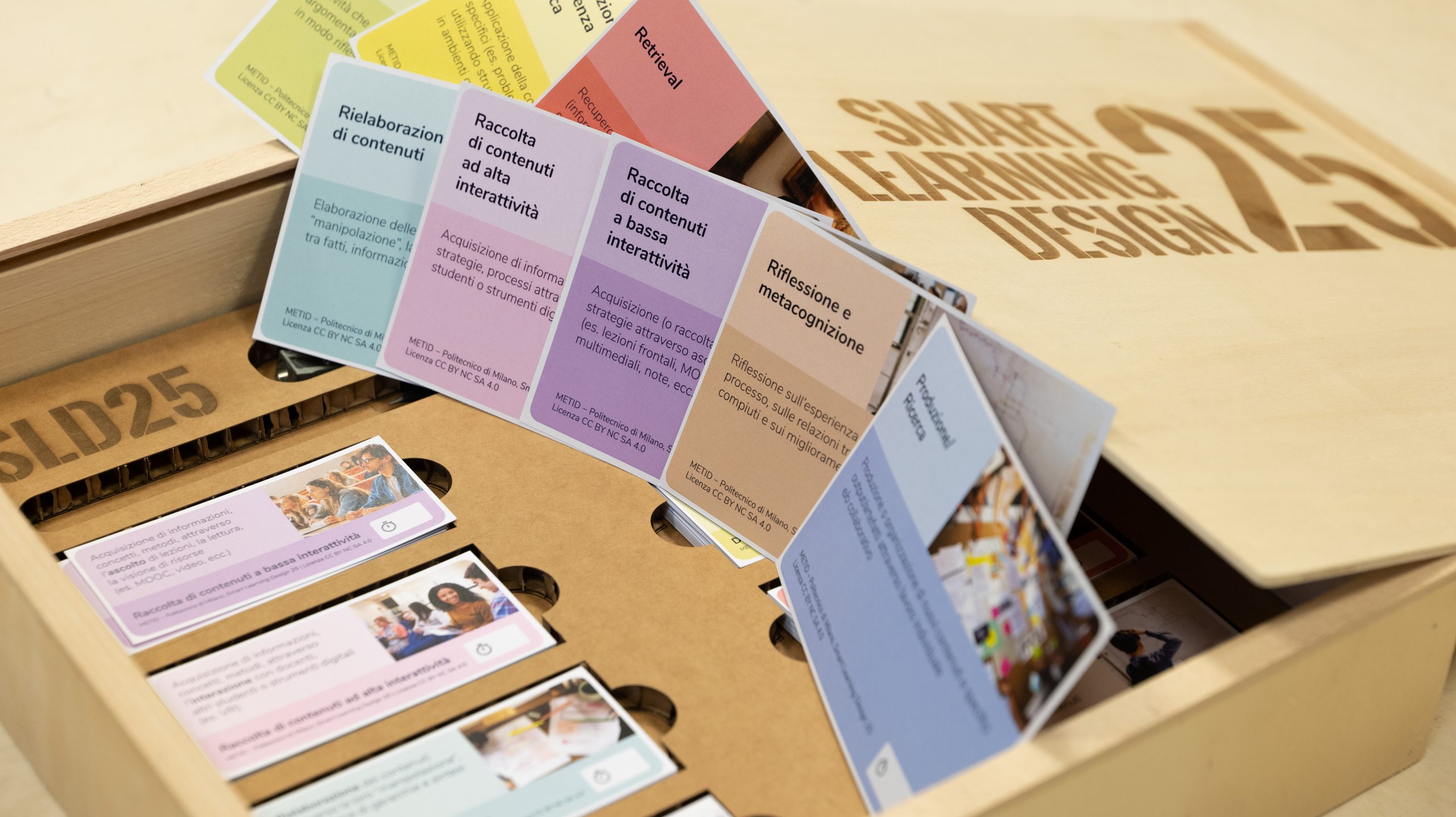
At METID we developed the Smart Learning Design“ method”, an approach that overcomes the distinction between presence and online, physical and digital, focusing on the design of active and participatory learning experiences oriented towards learning outcomes.
The smart learning paradigm expands the teaching process beyond the separation of lecture, study and exercise. The SLD25 method is based on the 25 hours of commitment required to obtain a CFU, of which 6-12 hours take place in the classroom.
The SLD25 provides several learning scenarios: presential, synchronous online, asynchronous online and autonomous mode. The key variable is time, which determines the weight of each learning event while maintaining the overall balance of the 25 hours.
Learning events can be individual or collaborative and assessed or not assessed. The method manages complexity by breaking down and recombining events in a hybrid system that integrates synchronous and asynchronous, individual and collaborative, physical and digital, autonomous and guided dimensions.
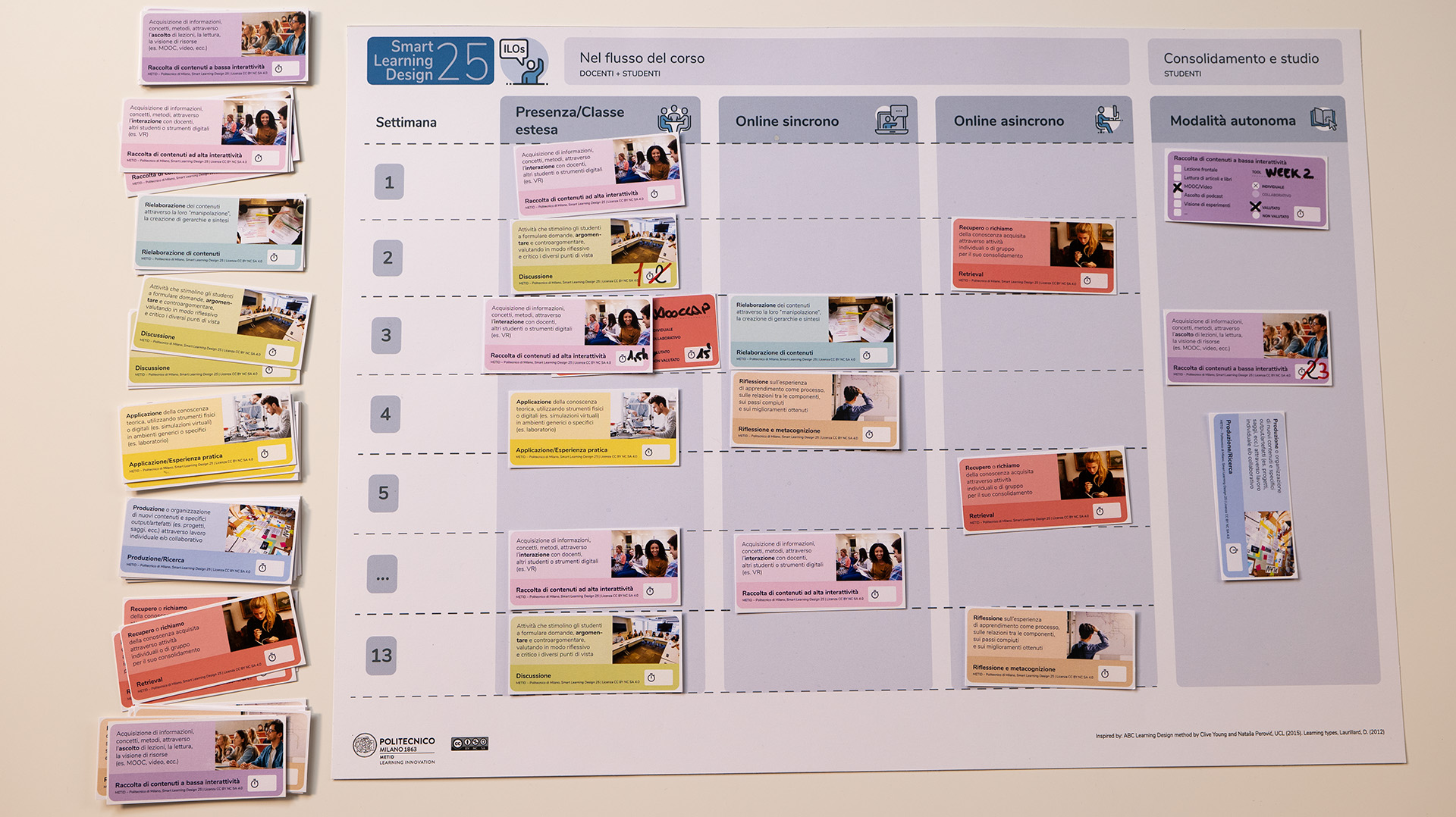
The method uses a visual frame, an evolution of UCL's ABC method, to coordinate and balance activities during the semester, ensuring consistency between educational objectives, teaching methods and the commitment required of students.
Smart Learning Design
The 10-step method
The short manual, revised by Carlo Mariconda based on the MOOC created and implemented by Susanna Sancassani, It was created with the aim of facilitating understanding of the transformative processes of didactics in higher education according to the Smart Learning Design model.
Published by @padovaup with the title “Smart Learning Design. The 10-step method”, the handbook guides the design of hybrid education through 10 clear and agile steps, supplemented by video explanations from the MOOC available on POK Polimi Open Knowledge.
The text offers a clear and quick explanation of the method, designed to understand it and apply it in practice. For this, the possibility of downloading all the operational materials - such as cards, board and quick instructions - useful for using it in a practical way is also provided.
The manual, published in Open Access, can be downloaded here only in italian.
Design your own course!
Download the board and cards and proceed!
Step 1
1. Choose learning events
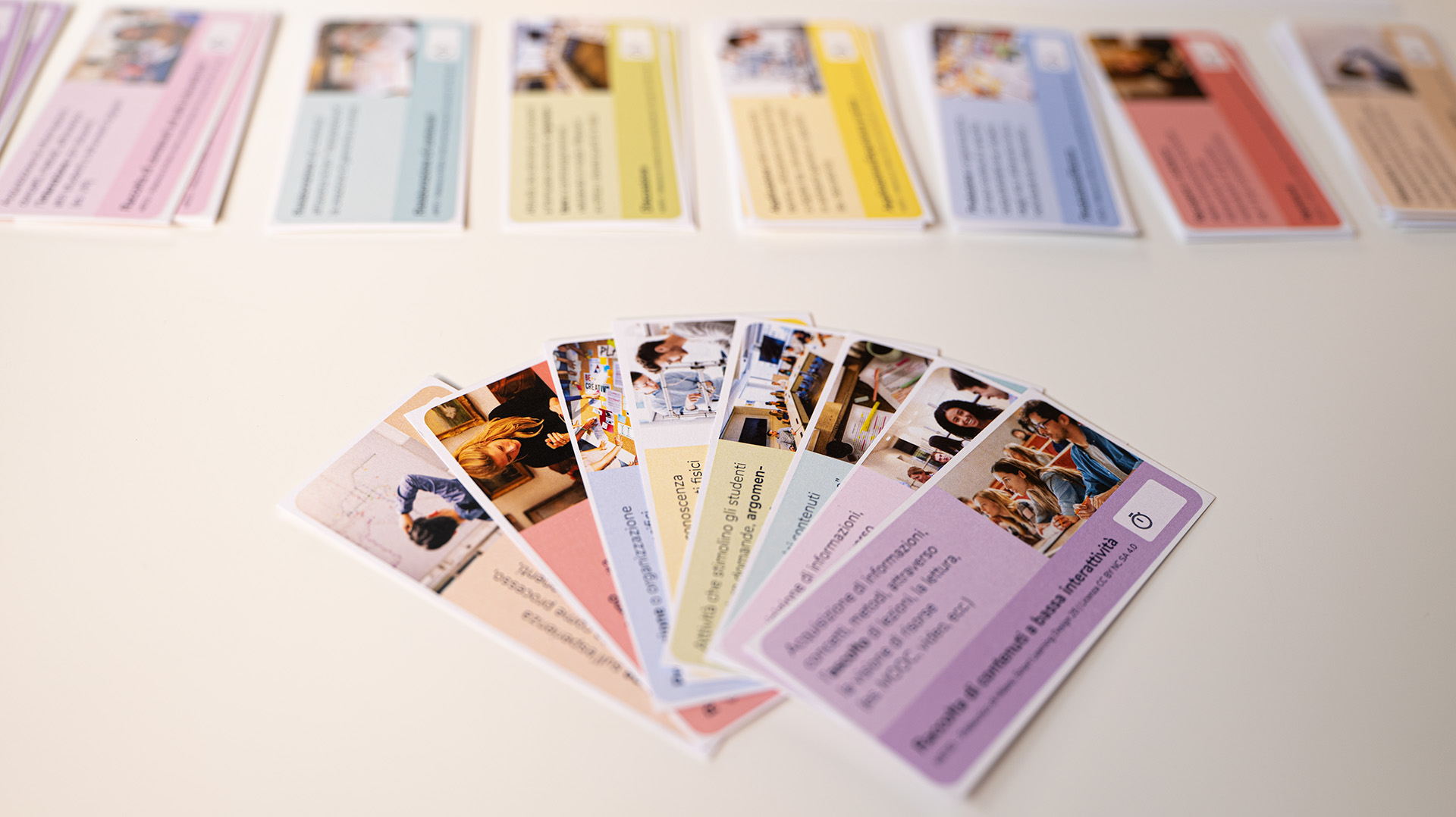
Choose the Learning Events (i.e. the cards) that make up your course. Associate each week of the course with the cards you intend to use, paying particular attention to the time to be devoted to each one.
Will there be interactive lessons, a project, some exercises and some retrieval time in your course? Get inspired by all the cards... and don't hesitate to include some you have never experienced.
Attention : ) You may spot a repeating cycle: if you recognise it, it may be useful to focus on it and fine-tune it!
Step 2
2. Focus on the text
- Which learning events will you conduct in presence/extended class?
- Which ones in synchronous online mode?
- Which ones in asynchronous online?
- And which ones will you leave to the autonomous management of the student?
Take a guess for now; you will decide on the final location at a later date.
Step 3
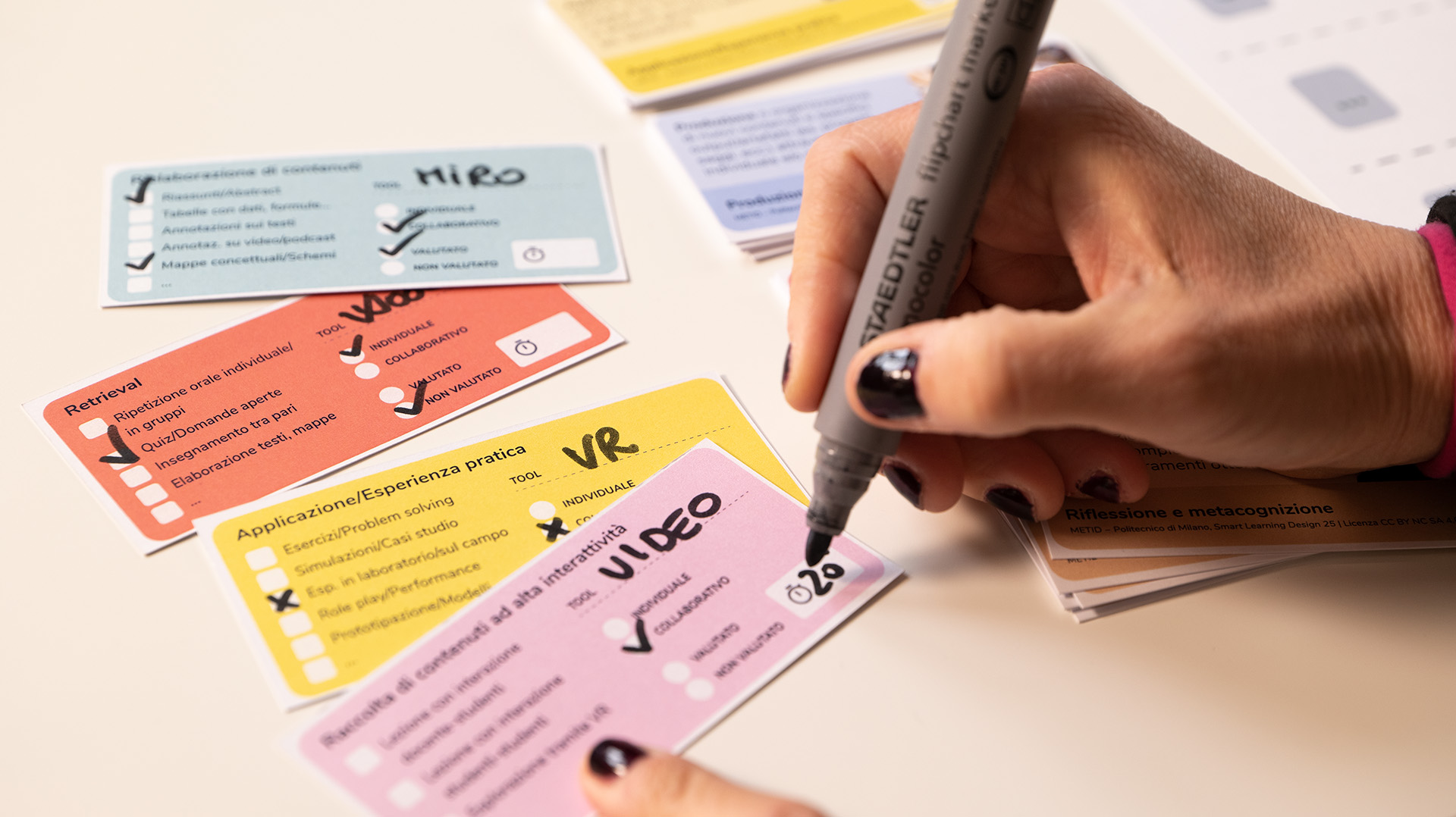
3. Turn the cards over and work on the detail
Turn the cards over and make a detailed design:
- What specific type of activity will it be?
- Will you use specific tools to support you?
- Will the activity be individual or collaborative?
- Will it be evaluated?
It also begins to identify the relationships between the various cards.
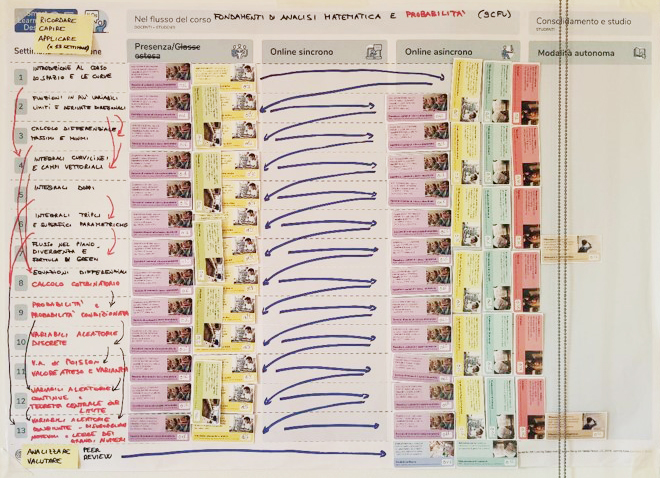
Step 4
4. “Walk away” and check the consistency of the project
At this point, return to give a overview e:
- Identify the relationships between the various cards: insert arrows or number the events if they are consequential. The more you work on the relationships between activities, the more effective and integrated your planning will be. For example: an activity carried out at home is the input for an activity that will be carried out in the classroom, etc.
- Validate or change the context of the cards (presence / extended class / online synchronous / online asynchronous / autonomous mode). It may be that at this point in the design you need to “move” some cards;
Book
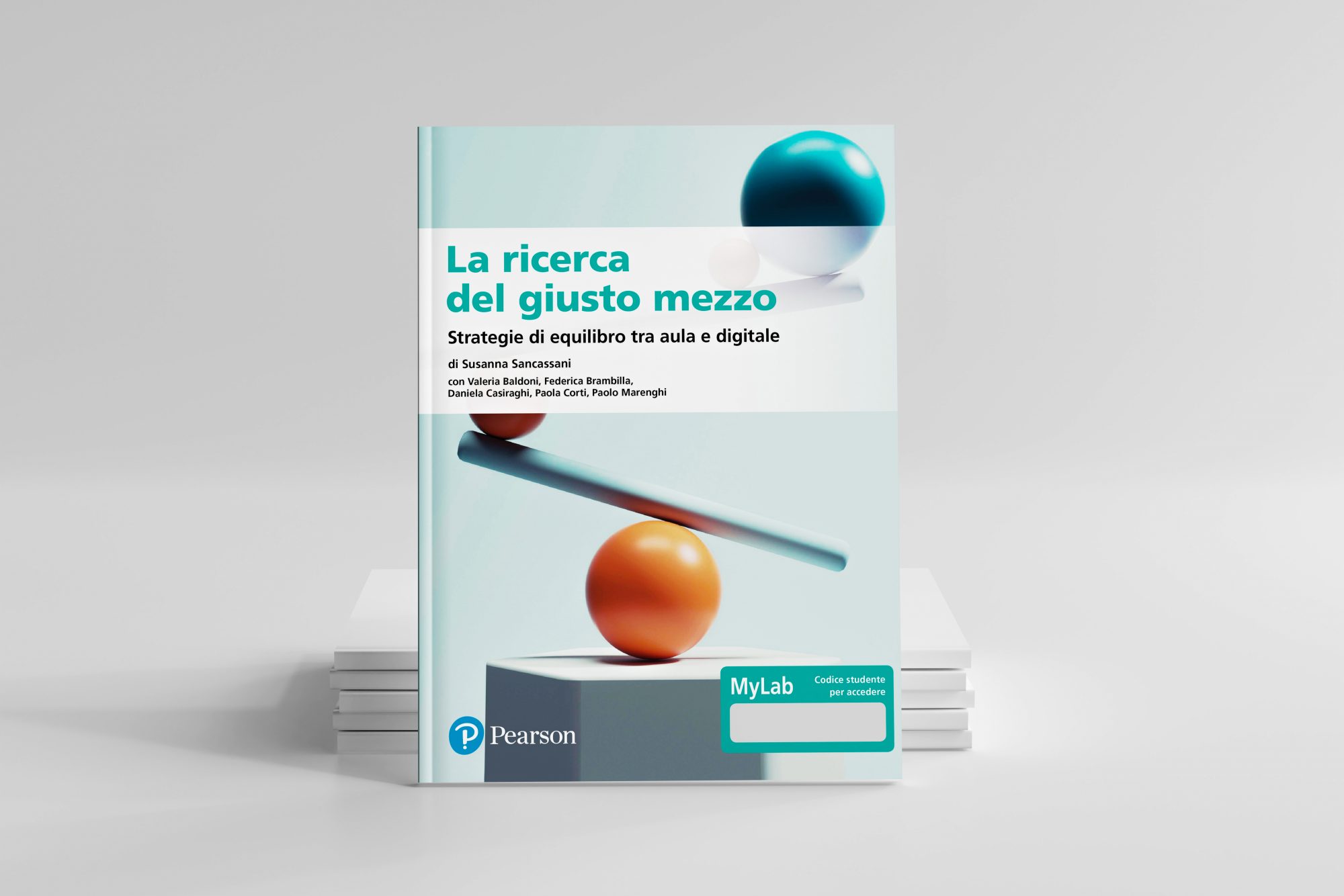
La ricerca del giusto mezzo (The search for the right medium)
Book
The volume, available only in italian, is aimed at teachers, trainers and decision makers the university and school world, offering logical and methodological tools to rethink teaching in an innovative way, integrating in a balanced way physical spaces and digital environments. Starting from the transformations accelerated by the pandemic, the book proposes a new set-up for educational innovation, based on the Smart Learning Design 25 (SLD25).
This approach allows deconstructing the complexity of the learning process in its fundamental elements - the learning events - and then recompose them in a systemic way, designing effective, coherent and engaging learning experiences, balanced between presence and online, between classroom and digital.
MOOC
Smart Learning Design
Smart Learning Design
A visual method for designing effective in-person and online learning experiences.
The MOOC Smart Learning Design introduces a method of instructional design that helps teachers to exercising maximum creativity and to maintain full control of the learning experience, in and out of the classroom, online and in-presence, in all the forms that the hybridisation of teaching can take.
Through the Smart Learning Design 25 (SLD25), the course offers concrete tools for designing integrated, flexible and coherent learning experiences, capable of enhancing the plurality of training scenarios and promoting a active and conscious involvement of students.
The MOOC is aimed at university and school teachers, trainers and decision makers of educational institutions, with the aim of providing logical and methodological tools useful for the effective integration and exploitation of digital resources and technologies in classroom teaching.
How to design effective and coherent learning-teaching experiences balanced between presence and online, between classroom and digital? How to govern the multiplicity of contexts that the current situation makes available to us thanks to the new paradigm of the’ “anywhere, anytime”?
The Smart Learning Design 25 model allows us to deconstruct the complexity of the learning process into its constituent elements (learning events) and then re-connect them in a systemic way, in order to design an effective and engaging learning interaction aimed at achieving lasting Learning Outcomes.
This MOOC represents the first step of a four-course course that progressively addresses the pillars of Smart Learning:
- the pedagogy, with Smart Learning Design;
- the technology, through the contribution of MOOCs and digital learning;
- the spaces, with the design of smart classrooms;
- the policy, related to Open Education as a lever for sustainable, quality educational innovation for all.