
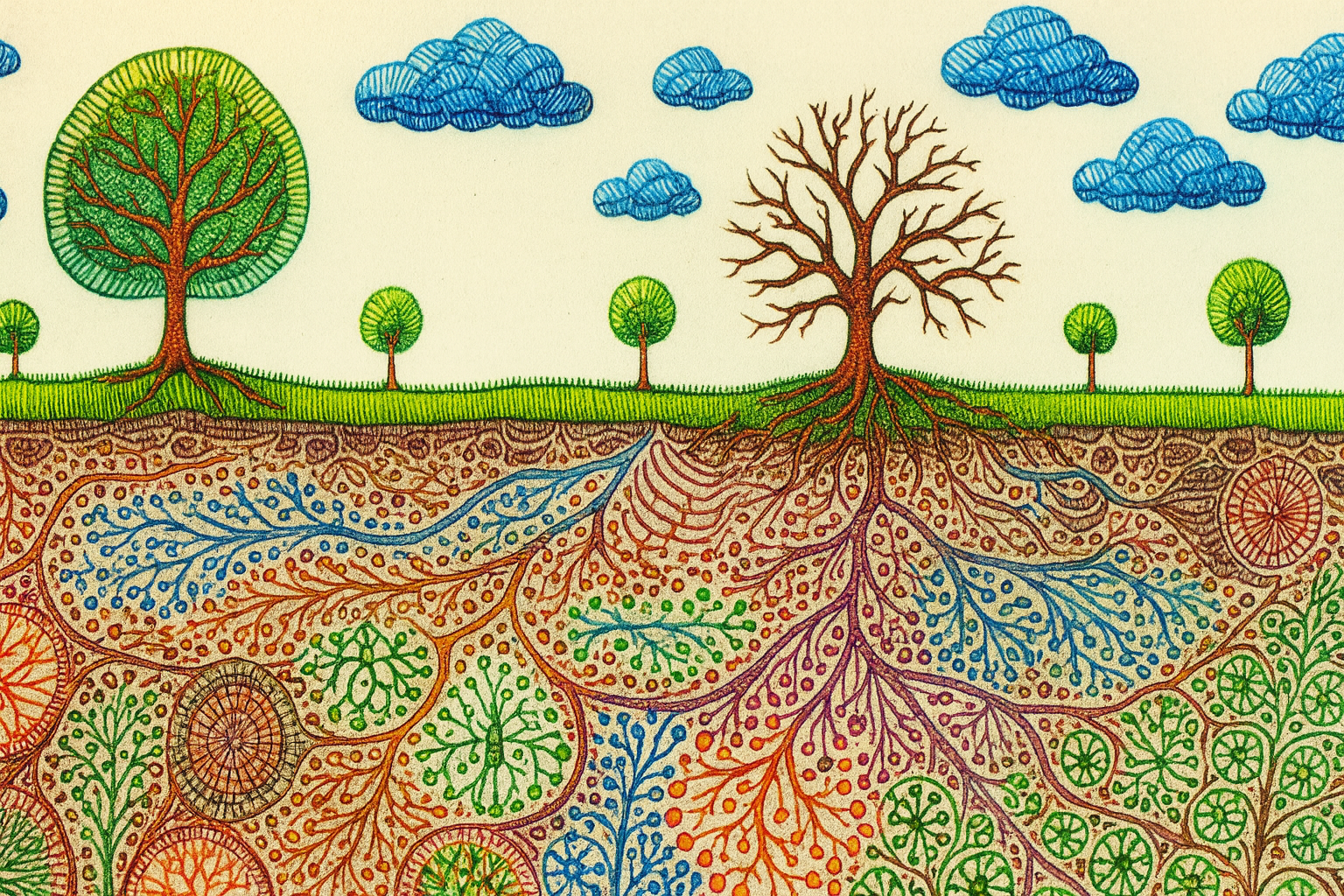
What is an AIbook?
It is a medium based on Artificial Intelligence, it is to all intents and purposes a “text”, i.e. a unit of communication that possesses coherence (internal logic) and cohesion (linguistic links between the parts), but in a digital, multimodal and conversational dimension.
L’AIbook “Learning with AI” is designed for learning to learn with Artificial Intelligence. Following the Smart Learning Design methodology, which articulates the learner's journey in key events (exploration, reworking, application, discussion, production, consolidation and metacognition) proposes strategies not only to make the best use of Large Language Models such as Chat GPT, but to improve one's ability to learn at the same time.

The Creator Concept
Creator
In AIbooks, the concept of author is completely transformed: there is no author in the traditional sense, but rather a Creator, who does not just write original content, but designs and feeds it dynamically and interactively. The creator also defines the operating rules of the AIbook: he or she is in practice a designer of the AIbook's interactive user experience. The creators of the AIbook “Learning with AI” are Susanna Sancassani and Daniela Casiraghi.
The concept of enquiry
Investigator
An AIbook does not have an index, but an Investigator: a corpus of questions regenerated at each access that dynamically defines its scope of use. The Survey is the conceptual heart of an AIbook, a collection of mother questions defining the perimeter of its knowledge. In contrast to a traditional index, which organises content in a hierarchical, fixed and sequential manner, the Survey functions as a dynamic network of fundamental questions.
The Rigzomion concept
Rigzomion
In books, the bibliography serves to recognise the sources used, guaranteeing transparency and scientific soundness, and enabling the reader to verify the information and delve deeper into the topics covered. This function in an AIbook is performed by a Rigzomion, a rhizomatic system of contents and rules, which organises knowledge through dynamic connections.